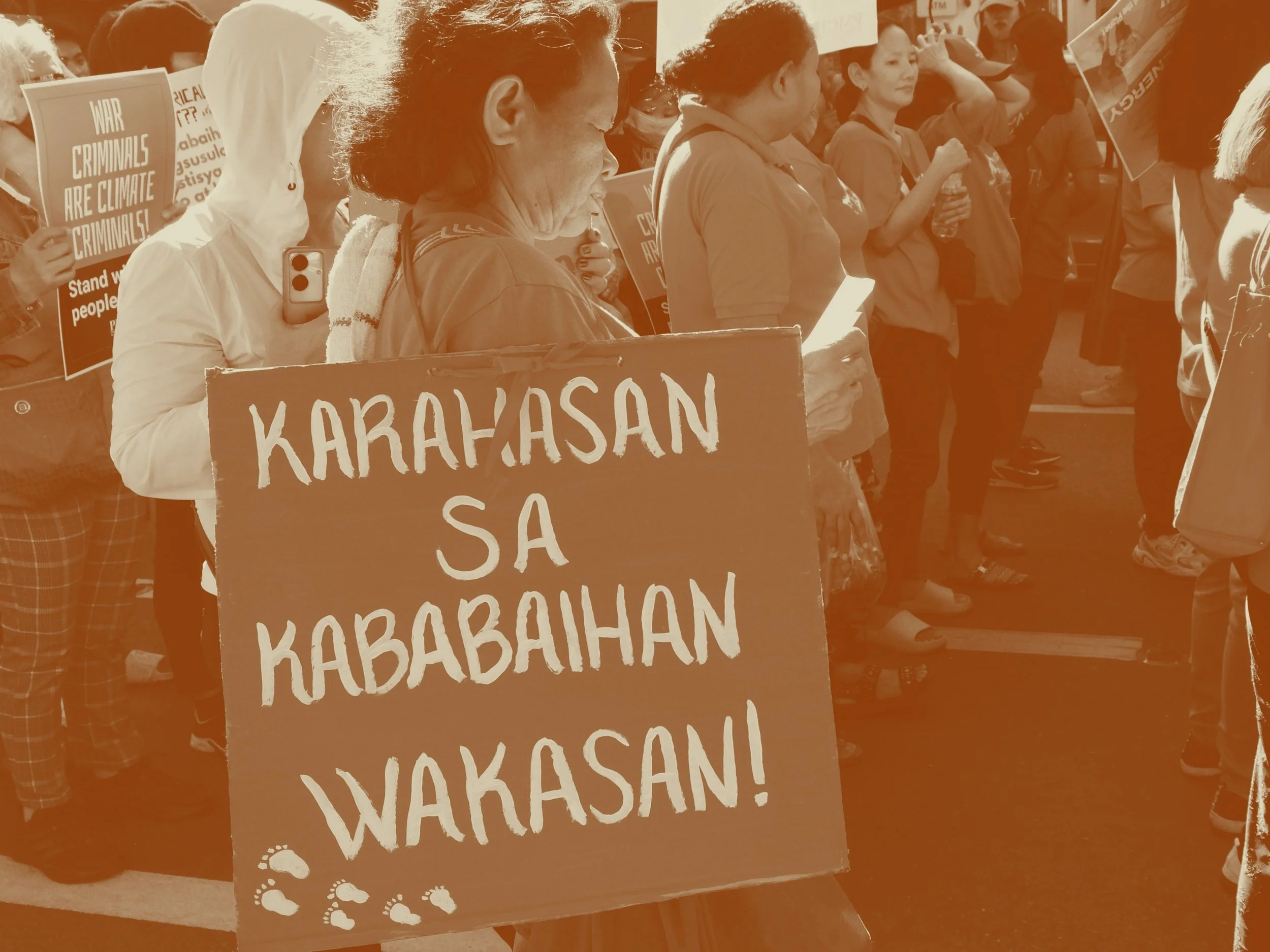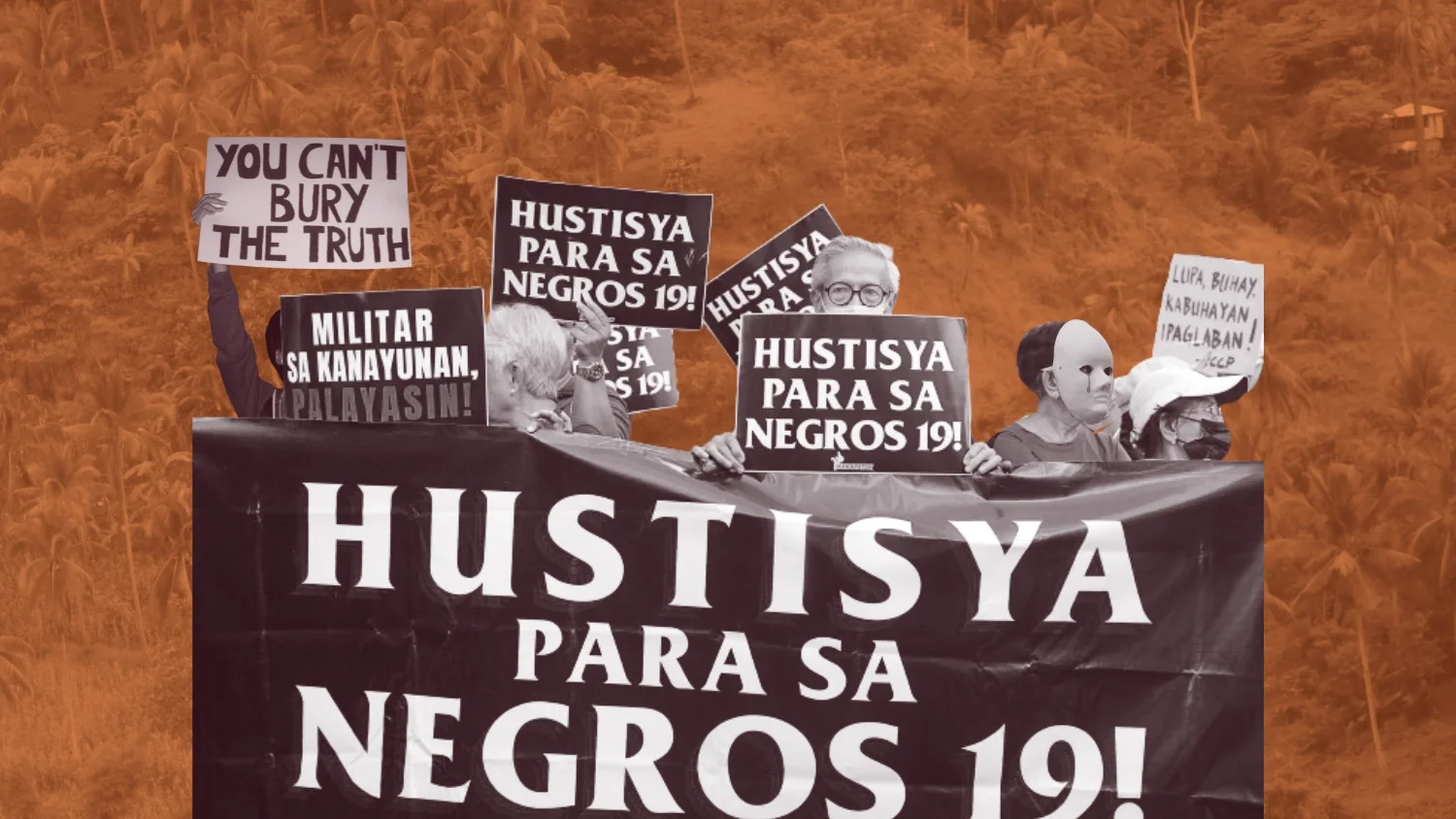
CSOs and people’s organizations calling for justice for the “Negros 19”
What We Know and What We Don’t
A nearly 12-hour military operation in Toboso, Negros Occidental in April left 19 people dead. Philippine military leaders hailed it as a “successful neutralization of armed insurgents” in the province. Aside from the dehumanizing military-speak, the operation is now under rightful scrutiny because it led to as many as nine civilians dead, two of whom were minors.
Now, several months later, the emerging record underscores longstanding concerns about the overall human rights situation in so-called insurgency hotspots. In places like Negros Island, decades of militarization and the resulting culture of violence have impacted civilian life, shrouding citizens under a climate of fear and creating conditions that can enable human rights violations to occur with impunity.
What We Know So Far
The story so far is that the operation was conducted on the basis of local intelligence indicating that a temporary encampment of the New People’s Army (NPA) had been identified in Sitio Sinugmawan, Barangay Salamanca, in the town of Toboso. The operation began in the early hours of April 19 and developed into “running firefights throughout the day.”
In a statement released by the Armed Forces of the Philippines (AFP) four days after the operation, they alleged that all 19 who were killed were members of the NPA. The AFP also cited that 24 firearms were recovered from the scene.
The Communist Party of the Philippines (CPP), in its April 27 statement, released the names of the casualties. It identified 10 of them as members of the NPA, its armed wing. They reported that the remaining nine were civilians.
The civilians were identified as RJ Nichole Ledesma, 30, a community journalist and poet who served as regional coordinator for Negros Island for Altermidya; Alyssa G. Alano, 22, a University of the Philippines-Diliman political science student and student councilor; Maureen Keil Santuyo, 24, a peasant organizer for the National Network of Agrarian Reform Advocates Youth (NNARA Youth) and a student of the University of the Philippines Open University (UPOU); Errol Wendel, 24, a researcher for the Unyon ng mga Manggagawa sa Agrikultura (UMA); Lyle Prijoles, 40, a Filipino-American human rights defender from California who was with the International Coalition for Human Rights in the Philippines (ICHRP); Kai Dana-Rene Sorem, 26, a Filipino-American youth organizer and musician from Washington state affiliated with Anakbayan South Seattle; Roel Sabillo, a 19-year-old farmer from Toboso; and two unnamed minors aged 15 and 17 from Barangay Salamanca in Toboso and Barangay Lalong in Calatrava, respectively.
A fact-finding mission in the area conducted in May interviewed residents who confirmed that they did not see Ledesma, Alano, Prijoles, Santuyo, Wendel, and Sorem carrying firearms during the clash.
Meanwhile, Sabillo’s sister Rosemarie faced the media in May and insisted he was a farmer. “Civilian, hindi siya sumali sa NPA,” (Civilian, he did not join the NPA.) she stated. Little is known about the circumstances surrounding the two minors.
The AFP’s Account
The Philippine government maintains that the operation was intelligence-driven and, according to the military’s account, “conducted in accordance with established rules of engagement and with full regard for civilian safety.”
Speaking before reporters in May, Secretary of Defense Gilberto Teodoro Jr. insisted that he is “100 percent sure” that the Philippine Army conducted itself properly during the encounter, calling the claims of civilian deaths as “hearsay.” These are strong words which the emerging evidence (or, equally, the suspicious lack of it) do not support.
Meanwhile, a photo that circulated widely across social media following the confirmation of casualties showed several of the Toboso 19 holding the flags of the CPP, NPA, National Democratic Front (NDF), and other organizations. Rappler and The Philippine Star have since fact-checked the photo as something created with AI, with both media outlets citing the group Human Rights Advocates Negros (HRAN), which has labeled the photo as an attempt at red-tagging.
In all of this, the central question remains about how an ostensibly successful operation against armed insurgents has led to the deaths of civilians.
Indeed, many human rights groups are firm in their skepticism of the military’s claims. The Philippine Alliance of Human Rights Advocates (PAHRA), in its statement condemning the killings, asserts that the “right to life is non-negotiable and must be the primary lens in evaluating this incident.”
Amnesty International Philippines Section Director, Ritz Lee Santos, III pointed out that this incident is the latest in an extensive pattern of civilians affected by military operations: “It is shocking that after almost 60 years of AFP’s counter-insurgency measures against the CPP-NPA, it is still failing to protect civilians caught in the crossfire or prevent communities from being displaced.” Lee was referring to the reported 160+ families displaced in the area following the operation.
Did Violations of International Humanitarian Law Occur?
The Commission on Human Rights, the constitutionally mandated arm of the Philippine government that oversees the State’s obligations to respect, protect, and fulfill the human rights of all, has since launched an independent probe into the incident. In its statement announcing the investigation, the CHR notes “the inconsistencies in the identities of those dead.” It adds that conflicting assertions about whether they are civilians require “thorough, independent verification,” but that “in case of doubt, persons shall be presumed civilians.”
This is the crux of the matter. The Philippine government has obligations related to its ratification of the Geneva Conventions, which comprise, to date, four conventions and three additional protocols. These conventions and protocols cover the foundation of international humanitarian law (IHL) and are affirmed further by the Philippines through the passage of Republic Act 9851 in 2009.
As PAHRA noted in its statement, the State and its security agencies are legally obligated to observe the principles of distinction and proportionality in cases of armed conflict. PAHRA also emphasized that RA 9851 mandates that the “state prosecute those who violate the rules of war, ensuring that even in internal armed conflicts, the dignity of the person is upheld.”
IHL mandates that in the case of armed conflict, there should be precautions to avoid harming civilians, that a clear demarcation between civilians and combatants must be laid out, and that the use of force must be proportionate. IHL also makes clear that these protections do not disappear simply because someone has taken up arms. Even those identified by the CPP as its own armed members remain protected once they are wounded, captured, or no longer taking part in hostilities. The observance of these principles is put into question in the case of the Toboso 19, even more so since two minors were among those killed. Altogether, these cast grave implications for the Philippine military’s conduct during the operation that resulted in the deaths of 19 people.
It is also important to highlight that the Toboso 19 killings sit firmly within the operational imperatives of Memorandum Order No. 32, the Duterte-era policy that has governed the heightened militarization in Negros Island, Samar, and the Bicol Region. It is this same directive that a 2020 UN Office of the High Commissioner for Human Rights report linked to human rights violations such as arbitrary detention, unlawful killings, and IHL violations in aerial operations. The 2020 report made clear in its recommendations that the policy ought to be rescinded. To this day, the Marcos Jr. administration keeps the order in force.
Where is the Evidence?
The key to clarifying whether IHL violations may have been committed is prompt, credible, and science-backed evidence-gathering. This being the Philippines, that has not happened.
Davao Today cited a social media post by Ephraim Cortez, president of the National Union of Peoples’ Lawyers (NUPL), which reported that the clash site was cordoned off by the military and the crime scene was not preserved, adding that “it was sanitized to dispose of any damning evidence and erase any trace of the atrocities committed during the operation.”
Enter Dr. Raquel Fortun, the country’s foremost forensic pathologist. With her team, Fortun examined five of the 19 bodies and reported their initial findings in a press briefing in early May.
In the briefing, she shared her frustration with how the crime scene was handled: “In the first place, all of these cases should have undergone basic homicide investigation, which means starting with the [crime scene investigation].”
“You don’t move the bodies. You don’t touch the bodies. You leave them there,” she added.
While she requested to conduct an autopsy on all 19 bodies, she was only granted access to five of them. Fortun said she only received two bags of clothing for all of them, with one bag mislabeled. The bodies were also in “moderate to advanced decomposition” by the time they arrived in Manila for examination. Some bodies were wrapped in plastic, including their faces.
Despite this, the forensic examination has yielded concerning findings that further raise suspicion about the military’s accuracy in reporting on what happened. For one, the bodies bore gunshot wounds on their backs, with three of the five bodies also bearing wounds to the head. This prompted Fortun to ask, “Bakit ang mga tama nila ay nasa likod kung confrontation iyon?” (“Why were they shot at the back if it was a confrontation?”)
Fortun also described one female victim who suffered four gunshot wounds that were not individually fatal, which means she could have survived if she had been attended to in time.
Still, these are initial findings, and a full report remains pending. Realistically speaking, however, barring a full account from anyone who was physically present during the operation, we may never grasp the full picture of what happened, given the poor handling of the crime scene and the recovered bodies of those slain. That should not have been the case. As Fortun succinctly puts it, “This is a homicide. May pumatay eh. Wala ba tayong accountability?” (“This is a homicide. Somebody committed killings. Don’t we have accountability?”)
That question of accountability rings loud and clear. The next question is equally urgent: will the Philippine government ensure or impede it?
Editor's Note: Shortly after the writing of this article, a National Fact-Finding and Solidarity Mission (NFFSM), which was participated in by national, local, and international organizations, announced its findings from a four-month investigation on the killings at Toboso. The document containing their findings has yet to be published online, but reports from the Philippine Daily Inquirer, AlterMidya, and Bulatlat provide key details from it.
MORE READING