

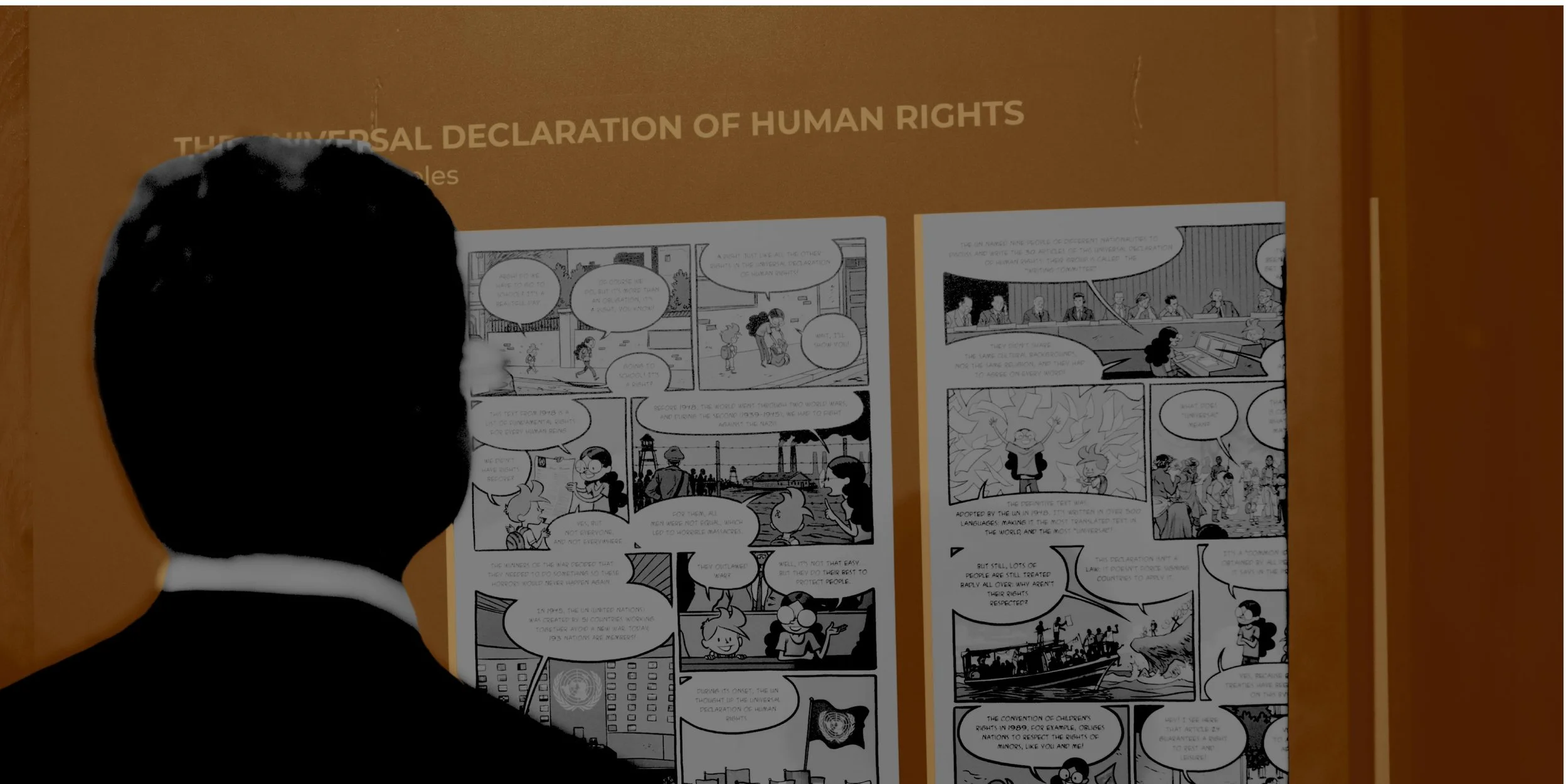
Human Rights Treaties
and Instruments
Human Rights Library
Explore and download key human rights treaties, declarations, and legal instruments in one place.
CATEGORIES
Select a category to jump directly to that section.
Universal Declaration of Human Rights
The Universal Declaration of Human Rights is one of the most important texts for understanding human rights.
Written after the Second World War, it sets out the fundamental rights and freedoms that belong to every person, everywhere. It offers a valuable introduction to the principles of dignity, equality, and justice that continue to shape societies around the world today.
You may view them in these languages:
International Criminal Law
The Philippines under former president Rodrigo Duterte effectively withdrew from the Rome Statute on 17 March 2019, resulting in the loss of International Criminal Court (ICC) jurisdiction in the Philippines from the same day onward. Human rights advocates, including the families of victims of human rights violations, continue to push for the Philippines to rejoin the ICC to ensure accountability and the rule of law over rights violations in the country.
Relevant national laws:
Also known as the Philippine Act on Crimes against International Humanitarian Law, Genocide, and Other Crimes Against Humanity (2009)
International Humanitarian Law
Geneva Conventions
The Geneva Conventions are a set of international treaties that establish the rules for humane treatment during armed conflict. They protect people who are not taking part in hostilities—such as civilians, wounded or sick soldiers, and prisoners of war—and set clear standards for how parties in a conflict must behave.
International Covenant on Civil and Political Rights (1966)
The foundational treaty that sets out the obligation of State parties to respect and uphold the people’s right of self-determination through the exercise of their civil and political rights.
Optional Protocol to the International Covenant on Civil and Political Rights (1966)
Establishes a reporting mechanism for individuals who claim that their rights under the International Covenant on Civil and Political Rights have been violated by a State party to the Covenant.Convention against Torture and Other Cruel, Inhuman or Degrading Treatment or Punishment (1984)
A legally binding treaty protecting individuals from torture and cruel, inhuman or degrading treatment, guaranteeing victims the right to file complaints with protections from ill-treatment or intimidation.Second Optional Protocol to the International Covenant on Civil and Political Rights, aiming at the Abolition of the Death Penalty (1989)
A legally binding treaty ensuring that State Parties take all measures necessary to abolish the death penalty within their jurisdictions and prevent its reintroduction once abolished.
Civil and Political Rights
Optional Protocol to the Convention against Torture and Other Cruel, Inhuman or Degrading Treatment or Punishment (2002)
Strengthens the protections of persons deprived of liberty from torture and cruel, inhuman, or degrading treatment through a system of monitoring by independent international and national bodies.
Relevant national laws:
International Covenant on Economic, Social and Cultural Rights(1966)
The foundational treaty that sets out the obligation of State parties to uphold the inherent dignity of all persons through their work, family life, standard of living, health, education, and cultural life.
Economic, Social & Cultural Rights
Convention on the Rights of Persons with Disabilities (2006)
Requires State parties to eliminate all forms of discrimination against persons with disabilities and to promote and protect their inherent dignity, human rights, and fundamental freedoms.
Relevant national laws:Republic Act No. 7277, or the Magna Carta for Disabled Persons(1992)
Persons with Disabilities
International Convention on the Elimination of all forms of Racial Discrimination (1965)
A treaty binding State parties in the elimination of racial discrimination in all forms and manifestations, towards the equal enjoyment of human rights and fundamental freedoms of all persons.
Race
Convention on the Elimination of All Forms of Discrimination against Women(1979)
Provides for the elimination of discrimination against women, requiring State parties to take full measures to ensure gender equality in education, employment, and economic and social activities.
Convention on the Rights of the Child (1989)
Mandates State parties to take all necessary measures in ensuring that every child grows up safely and free from all forms of discrimination, making their best interest a primary consideration.
Beijing Declaration and Platform for Action (1995)
Adapted as the global framework for the empowerment of women and girls, providing an agenda for the advancement of gender equality in all areas of life and in all spaces, both public and private.
Optional Protocol to the Elimination of All Forms of Discrimination against Women (1999)
Establishes a reporting mechanism for victims who claim that their rights under the Convention on the Elimination of Discrimination against Women have been violated by a State party to the Convention.
Requires State parties to establish all necessary measures in preventing the recruitment and involvement of children in armed conflict, protecting their rights, safety, and well-being.
Mandates all signatory States to protect children from being sold and from being involved in child prostitution and pornography, providing for the elimination of all such forms of activities.
Women and Children
Relevant national laws:
Presidential Decree No. 603, or the “Child and Youth Protection Code (1974)
Republic Act No. 6725, “Prohibition on Discrimination Against Women”(1989)
Republic Act No. 7877, or the “Anti-Sexual Harassment Act of 1995”
Republic Act No. 9262, or the “Anti-Violence Against Women and Their Children Act of 2004”
Republic Act No. 11862, or the “Anti-Trafficking in Persons Act of 2022”
Republic Act No. 12199, or the “Early Childhood Care and Development System Act”(2025)
Ensures that States are responsible for protecting the rights of migrant workers and their families, guaranteeing equal treatment without discrimination throughout the migration process.
Relevant national laws: