

The Rights-based Approach to CHED’s Proposed Reframed General Education Curriculum
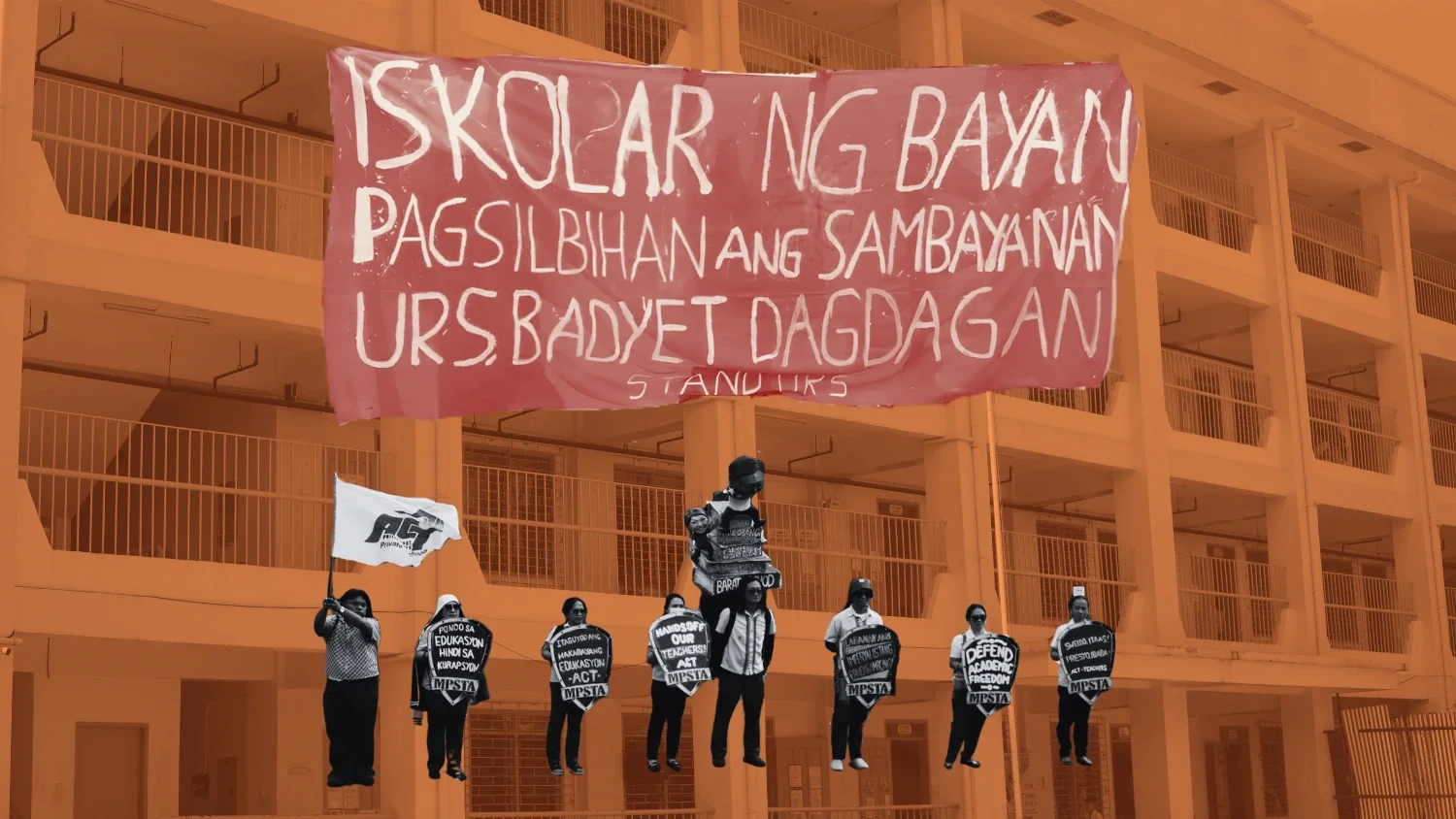
Future college students may face a drastically different higher learning experience should the Commission on Higher Education’s (CHED) proposed Reframed General Education Curriculum (RGEC) push through as early as 2028.
It is said to be the most sweeping reform of higher education since the country’s implementation of the K-12 system for non-tertiary students. However, critics of the proposal are already raising important questions about how CHED—and the Philippine government as a whole—views the education of our young people.
CHED’s Proposal Explained
The proposed RGEC would reduce mandatory general education (GE) units for college and university students from 36 to between 18 and 21 units. The new curriculum will also cap GE units at a maximum of 36 for universities with autonomous status.
The remaining 18-21 mandatory units will cover five required courses:
Professional Communication
Global Trends and Emerging Technologies
Data, Evidence, and Ethics in a Knowledge-Driven Society
Rizal and Philippine Studies
Labor Education
The three remaining units are intended for an institutional GE subject that universities can design themselves based on their educational missions.
GE subjects in the humanities and social sciences, such as philosophy, ethics, art appreciation, literature, and history, would be integrated into the broader courses listed above.
According to CHED, this reframing is necessary to address the redundancy in topics and content between senior high school and tertiary level subjects. In a public hearing held in May for the proposal, the Technical Panel for General Education (TPGE) chair Edizon Fermin highlighted that the current GE in Philippine universities has “repetitive characteristics and content” with the Senior High School (SHS) curriculum. Fermin also pointed out that the current GE load is on the high side compared to other countries in Southeast Asia, Australia, and the European Union.
The proposal also adopts an outcomes-based education framework and moves away from a “content-based design” curriculum. Rappler cites Jonathan Macayan, TPGE co-chair, who explained that focusing on outcomes “shifts the focus to the desired competencies and to the learners,” adding that outcomes refer to “demonstrable student abilities and competencies beyond knowing and understanding.”
Crucially, the panel confirmed that the reframing is also aimed at producing graduates who can better meet the demands of the job market.
But critics of the proposal are pointing out that this issue is not merely about how many GE units are too many. Instead, we need to examine what kind of education we are prepared to offer to our youth and the expectations we place on their development as they grow into adults.
What We Might Lose Without a Holistic General Education Curriculum
Are our college students overloaded with GE subjects? Perhaps. Should there be improvements in pedagogy and teaching quality? Definitely. Still, there is something profoundly limiting in the proposition that higher education must mainly serve as a training ground for job-ready adults.
Given the inherent difficulties many young Filipinos face in even reaching college, general education subjects offer one of the few remaining environments for our youth who do reach the college level to engage in topics that contribute to their holistic development as human beings.
Take ethics, for example. One of the more cogent critiques during the proposal’s public hearing came from University of Santo Tomas (UST) Philosophy professor Paolo Bolaños, who questioned CHED’s decision to fold ethics—a vital discipline that encompasses all human affairs—into a data management and literacy course. “Ethics is reduced to what, a response to fake news, and a tool for managing data?”
Then there are subjects like literature, philosophy, art appreciation, and history. With proper instruction and guidance, these subjects contribute to the development of critical thinking, curiosity, imagination, and a deeper sense of national and cultural identities. There is no metric that exists that can quantify the loss of such an experience for people who are at a crucial formative stage in their lives.
Indeed, there is a strong case for a holistic, broad-based, and humanistic general education curriculum that arms students with an appreciation and understanding for their roles as rights-holders, as citizens, and as actors existing in a political reality.
The thing is, if we are to follow the impulse of only privileging employability, technical know-how, and workers’ efficiency in higher education, we are directly discouraging young people’s potential in critically engaging in public life and meaningfully participating in democracy. These are not merely abstractions; there are serious implications on the quality of citizenship that is possible if we follow through on this dilution of general education. In other words, we might end up with a generation that is perhaps better trained for labor, but less prepared for citizenship.
Pursuing A Rights-Based Approach to Education Reform
In tackling this proposal, all stakeholders must bear in mind that the Philippine government is bound by the Constitution to uphold every Filipino’s right to quality education. The Constitution also affirms the role of the youth in nation-building and requires the State to “encourage their involvement in public and civic affairs.”
Article 26 of the Universal Declaration of Human Rights is also particularly relevant to this discussion, which states, in part:
Education shall be directed to the full development of the human personality and to the strengthening of respect for human rights and fundamental freedoms.
In addition, the United Nations Educational, Scientific, and Cultural Organization’s (UNESCO) Right to Education Handbook also highlights education as a key right that is instrumental in the exercise of all other human rights and has “economic, social, cultural, civil, and political dimensions.”
Further still, this is a discussion that should not remain between policymakers and academics. At stake is the future of the Filipino youth, and their voices must be heard. Of the 15 official position papers CHED has confirmed to have received on the proposal, most if not all appear to be from non-student stakeholders. Given that the initial implementation of the RGEC has been deferred to 2028, there needs to be more opportunities for current and incoming college students to be part of genuine consultations.
It should be clear that this is not simply a debate over curriculum content. Rather, it reveals how we are at a critical junction where we have to decide what it truly means to invest in the full human development of our Filipino youth.
The idea that higher education is mainly a venue for the creation of economic actors and not fully realized citizens is plainly wrongheaded. While there will always be merit in ensuring that our young people graduate with useful skills in their chosen disciplines, that should not come at the cost of depriving young Filipinos from learning how to become more humane and critically minded citizens of the world.
Taking on education reform with a genuine rights-based approach would help make this a reality—a society where Filipinos are armed with the skills of citizenship and the critical discernment to effectively claim their rights, demand accountability from the State, and work towards dismantling systems that perpetuate all forms of inequities.
The Filipino youth deserve nothing less.